Sunday, 6 November 2022

Assigment paper 201

 Name – Hirva Pandya

Roll No.: 10

Enrollment No.: 4069206420210022

Paper no: 201

Paper code: 22401

Paper name: Indian English Literature :1

Topic: Comparative Study of character of Sita Ramayana v/s poem Lakshman

Sem.: 3 (Batch 2021- 2023)

Submitted to: Smt S.B. Gardi Department of English, M.K. Bhavnagar University

E-mail- pandyahirva815@gmail.com

About The Poetess

Indian poet and translator. Born in Calcutta in 1856; died in 1877 of tuberculosis; daughter of Govin Chunder Dutt.


The daughter of a justice of the peace, Toru Dutt was born in Calcutta to a family of high-caste cultivated Hindus, and her parents were converts to Christianity. She received a broad education at home with her sister Aru . At 13, she and her sister were sent to France to study for a few months and attended a convent in Nice. The family moved to Cambridge, England, in 1871, and the sisters heard lectures that the philosopher  Henry sidgwick and other liberal dons had begun for women. The family returned to India in 1873, and as Dutt resumed her studies she began learning Sanskrit. With a strong affinity for the French character and an aptitude for the French language, she undertook a study of French romantic poetry and produced essays on Leconte de Lisle and Joséphin Soulary as well as a series of English translations of poetry. In 1876, the translations were collected in A Sheaf Gleaned in French Fields. Her collection Ancient Ballads and Legends of Hindustan was selected from work left unpublished at the time of her early death, and these English versions of native Indian legends have been said to show strong original power. After Dutt's death of tuberculosis while in her early 20s, her novel, written in French and entitled Le Journal de Mlle. d'Avers, was published in 1879. Dutt is regarded as a pioneer for her writings in an age when few Indian women published.


About The poem: Lakshman

The poem "Lakshman" is from Dutt's Ancient Ballads and Legends of Hindustan (1882). It tells a story from the Hindu epic Ramayana, in which the hero Rama is told to procure a golden deer for his wife, Sita. After Rama leaves Sita with his brother, Lakshman, for safekeeping, he finds out that the deer is actually a demon and kills it. However, when the demon dies, it calls out for help using Rama's own voice. Though Lakshman knows Rama is invincible and does not worry, Sita panics at the sound of the cry for help and asks Lakshman to go and investigate. So that he can both please Sita and also ensure that she stays put, as ordered by Rama, Lakshman draws a line in the ground that Sita is not to cross while he leaves to search for Rama. While he is absent, however, Sita crosses the line and is abducted by the demon king Ravana.


Character of Sita in Ramayana

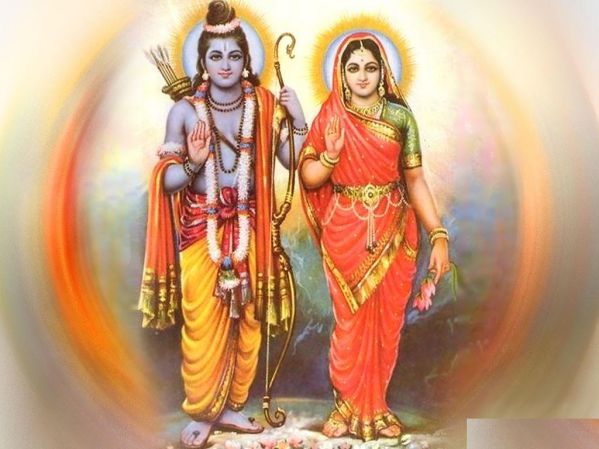
Sita, symbolizes the meaning of an ideal woman, filled with loyalty for her husband. The meaning of her name is “furrow” that symbolizes the place where she was found by her father. When we hear of Sita, the first thing that strikes us is her unconditional bond of love with Lord Rama. In the face of extreme hardship, Lord Rama’s queen displays extraordinary character, founded on her pure devotion to the Lord. Rama, had to pass Shiva’s test of lifting and breaking a heavy bow, to win the right to marry Sita. Rama is the incarnation of Lord Vishnu, while Sita is the incarnation of Goddess Lakshmi, hence, they were born to be together connected by a string of eternal love. Sita embodies the character of an ideal woman to an ideal man, containing the right thoughts and actions.


Birth of Sita

The birth of Sita, is still a very controversial topic, open to debate amongst scholars. In Valmiki’s Ramayana, she was found in a furrow, as an abandoned child. This is the reason she is called the daughter of Mother Earth. However other potent theories that have been proposed about Sita’s birth are:


Sita as Vedavati

Vedavati was the daughter of sage Kushadhwaja, a learned scholar, living in hermitage deep inside the forests. Vedavati, who lives with her father, grows up to be a woman with ethereal beauty, and a fervent devotee of Lord Vishnu. She thus vows not to marry anyone except the Lord himself. One day, after her parents’ death, Ravana spots her and tries to proposition her. She denies as usual. Ravana, getting frustrated, tries to molest her by pulling her hair. She cuts off her hair, and cursed Ravana that she would jump in the fire and be reborn to become the cause of his destruction. She jumps into the fire, and enters it fearlessly. Legend has it that she was reborn as Sita, to cause the destruction of Ravana, and by being reborn as Sita, Vedavati also fulfills her dream of marrying Lord Vishnu, in the avatar of Rama.


Sita as Ravana’s Daughter

This theory about Sita being Ravana’s daughter is a very popular one. Ravana and his wife Mandodari were childless for many years after their marriage, and when Mandodari finally becomes pregnant, an astrology prediction states that the particular child will be the cause of his obliteration from the Earth. When this child was born, Ravana threw the child into a basket, however, that child was protected by Mother Earth, and was found by King Janaka. Thus, Ravana, while lusting for Sita, and tormenting and torturing her, never even imagined in his wildest dreams, that Sita was his own daughter. Thus he committed a greater sin, than just abducting Rama’s wife, he lusted for his own daughter, giving way to incest, which is a grave sin in Hindu mythologies. The astrology therefore proved to be right as Sita’s abduction and captivity was primarily responsible for Ravana’s obliteration from the face of Earth.


Sita’s Unconditional Love for Rama

When Rama was banished to the forests, for fourteen years, she willingly gave up her luxurious life at the kingdom to accompany Rama, as she believed that it was her duty to stay with her husband. Rama initially denied her, but she still persisted and accompanied him. She was so worried when Rama went alone in the forests, she sends Lakshmana to accompany him, thereby risking her life by staying alone. She successfully passed and endured the test of fire, agni pareeksha, clearing all doubts of Rama, regarding her purity, thereby also proving that she had been untouched by any other man, during her period of abduction by Ravana. At the end of the story, she again proved her purity, however this time, she vanished inside the earth, from where she had originated.


Sita’s Inner Harmony and Peace with Nature

In Valmiki’s Ramayana, Sita’s origin is depicted to be from Mother Earth itself. Thus, Sita is a part of Nature, and is shown to always be in harmony and at peace with Nature. When Rama was denying her not to accompany him to the forests, she said that she would remain happy merely by gazing at the hills, lakes and rivers. This exhibited her immense love and oneness with Mother Earth and all its natural elements. Throughout the Ramayana she has been referred to as “golden-skinned” and “doe-eyed”. The golden deer symbolizes an image of beauty and forest wildness.

this inner harmony that breeds other good qualities of Sita. We see her extreme forgiveness, when she pardons all the female guards, when Hanuman offered to kill them. She understood that what they did was a consequence of Ravana’s orders. She is also very generous, when it comes to gratitude. She willingly gifts Hanuman the necklace that Rama gave her, as a token of appreciation of all the help that that he and his army provided to Rama to rescue her back. Her generosity is also highlighted when she asks the wives of all the monkey warriors to accompany them back to Ayodhya, to participate in the grand celebrations there with them.


Character of Sita in Toru Dutt's Lakshmana

As it is observed by MEENAKSHI T Assistant Professor, Department of English New Horizon College-Marathalli, Bangalore

The poem begins with the anxiety of Sita: 

Hark! Lakshman! Hark, again that cry! It is, −it is my husband’s voice! Oh hasten, to his succor fly, No more hast thou, dear friend, a choice. (Stanza 1) 

This kind of words from Sita expresses her heightened anxiety as a woman who is scared that her husband and her master is in danger. Added to this, it also surfaces the insecurity that Sita has within her of her protecter being in danger and the subsequent calamities that might fall on her in his absence

Sita’s character in the poem ‘Lakshman’ may not be strictly in keeping with her portrayal in the Ramayana, but it is in accordance with human nature, and shows the working of a woman’s mind. In the poem she does not appear as an idealized queen, but as a woman, who behaves as a woman in her condition ought to be. She acts impulsively and easily falls in the trap laid down for her by Ravana, the tricky and mighty king of Lanka. 


In the beginning Sita is mild, gentle and unsuspecting and has full faith in Lakshman’s sincerity and loyalty towards her and Rama. But later on her temper changes and she becomes wild and fierce in reaction to Laksman’s lethargy in action. Instead of feeling convinced by Lakshman’s arguments, Sita becomes suspicious of his words, begins to doubt the very sincerity and truthfulness of his feeling towards her and Rama. Sita thinks that Lakshman has an evil eye on her and is an enemy in disguise. Further, she thinks that he wants Rama’s death, so that he may possess his wife for himself. She begins to hurl bitter sarcastic words at him, and openly accuses him of treachery, deceit, guilt, insincerity and cowardice. Side by side with Rama’s safety, she now begins to think of her own safety from the enemy in Lakshman.


Conclusion

According to the diasporic perspective the mythological figure of Sita projects an ambivalent function of a subservient wife and a powerful symbol emanating resistance to maintain her obedience till the end. 

Work cited:

Dutt, Toru, et al. “Toru Dutt: Poetry ‘Lakshman’ Summary and Analysis.” GradeSaver, https://www.gradesaver.com/toru-dutt-poetry/study-guide/summary-lakshman

Research Journal of English Language and Literature (RJELAL) Vol.4 ... http://www.rjelal.com/4.2.16C/900-903%20MEENAKSHI%20T.pdf.

Temple PurohitTemplePurohit.com is a one-stop destination for all your spiritual needs - Get in-depth information on Spiritual topics, et al. “Sita in Ramayana - the Ideal Woman - Templepurohit - Your Spiritual Destination: Bhakti, Shraddha Aur Ashirwad.” TemplePurohit, 16 Dec. 2016, https://www.templepurohit.com/sita-ramayana-ideal-woman/.

Women in World History: A Biographical Encyclopedia. . Encyclopedia.com. 28 Oct. 2022 .” Encyclopedia.com, Encyclopedia.com, 6 Nov. 2022, https://www.encyclopedia.com/women/encyclopedias-almanacs-transcripts-and-maps/dutt-toru-1856-1877.

Word count:1574


Saturday, 5 November 2022

Thinking Activity On Flipped Learning: New Poets

 This blog is reponse  of  Thinking Activity which is assign by Yesha Bhatt Ma'am   This blog deals with a few important topics of Indian writing in English.  in this blog Three Prose Writers: Radhakrishnan, Raghunathan, Nirad Caudhari; The ‘New’ Poets; and Conclusion from K.R Srinivasa Iyenger’s Indian Writing in English. This blog tries to attempt a few questions assigned to the task.

 Click here for visit teacher's blog


Task 1: The Three prose Writers

Here i wrote about  answer of questions which is assigned in the task 

write a note on  Radhakrishna's perspective on Hinduism

About S. Radhakrishna


Sarvepalli Radhakrishnan, (born Sept. 5, 1888, Tiruttani, India—died April 16, 1975, Madras [now Chennai]), scholar and statesman who was president of India from 1962 to 1967. He served as professor of philosophy at Mysore (1918–21) and Calcutta (1921–31; 1937–41) universities and as vice chancellor of Andhra University (1931–36). He was professor of Eastern religions and ethics at the University of Oxford in England (1936–52) and vice chancellor of Benares Hindu University (1939–48) in India. From 1953 to 1962 he was chancellor of the University of Delhi


Radhakrishnan’s written works include Indian Philosophy, 2 vol. (1923–27), The Philosophy of the Upanishads (1924), An Idealist View of Life (1932), Eastern Religions and Western Thought (1939), and East and West: Some Reflections (1955). In his lectures and books he tried to interpret Indian thought for Westerners.

Radhakrishnan has been held up in academic circles as a representative of Hinduism to the West. His lengthy writing career and his many published works have been influential in shaping the West’s understanding of Hinduism, India, and the East.


Radha krishna's  perspective on Hinduism

Radhakrishnan argues that Hinduism, as he understands it, is a scientific religion. According to Radhakrishnan, “if philosophy of religion is to become scientific, it must become empirical and found itself on religious experience”  True religion, argues Radhakrishnan, remains open to experience and encourages an experimental attitude with regard to its experiential data. Hinduism more than any other religion exemplifies this scientific attitude. “The Hindu philosophy of religion starts from and returns to an experimental basis”  Unlike other religions, which set limits on the types of spiritual experience, the “Hindu thinker readily admits of other points of view than his own and considers them to be just as worthy of attention” . What sets Hinduism apart from other religions is its unlimited appeal to and appreciation for all forms of experience. Experience and experimentation are the origin and end of Hinduism, as Radhakrishnan understand it.

Radhakrishnan argues that  the hallmark of Hinduism throughout its history. In a revealing passage, Radhakrishnan explains: “The truths of the ṛṣis are not evolved as the result of logical reasoning or systematic philosophy but are the products of spiritual intuition, dṛṣti or vision. The ṛṣis are not so much the authors of the truths recorded in the Vedas as the seers who were able to discern the eternal truths by raising their life-spirit to the plane of universal spirit. They are the pioneer researchers in the realm of the spirit who saw more in the world than their followers. Their utterances are not based on transitory vision but on a continuous experience of resident life and power. When the Vedas are regarded as the highest authority, all that is meant is that the most exacting of all authorities is the authority of facts”


Hindus believe that there are different paths to God, and each individual has their own path. This is one of the reasons why there are many different books to learn from, not just the Vedas, but the Puranas, Ramayana, Mahabharata, to name a few. The reason why it is thought that each person has their own path to God is that religious experience cannot be made objective. Instead, our path to God is crafted from how we are disposed to experience God, therefore we all have a different experience of what God is, and a different path to God.


For Radhakrishnan, the marginalization of intuition and the abandonment of the experimental attitude in matters of religion has lead Christianity to dogmatic stasis. “It is an unfortunate legacy of the course which Christian theology has followed in Europe that faith has come to connote a mechanical adherence to authority.


An Autobiography of unknown indian  is more of national than personal History Explain


“The Autobiography of An Unknown Indian” is the most widely known work of famous thinker and writer Nirad C. Chaudhuri, an Indian English literary artist of the 20th century. He had written this autobiographical account when he was around 50. Although he was born in 1879 in Kishoreganj, a small town of at present Bangladesh, yet his autobiographical description relates his mental and intellectual development, his life and growth connected to Indian atmosphere exclusive Calcutta. His observation of vanishing landmark the connotation of this dual-changing Indian situation and historical forces that were making the exit of British from Indian an imminent affair.

Although, this book is by nature an account of autobiography yet it is more concerned with the story of the struggle of a civilization with a hostile environment in which the destiny of the British rule become necessarily involved. It is about the maturity of a scholar’s mind in that environment. It seeks to show how the mind and character of a typical Indian were made, shaped and quickened by the same British rule.


In this book, Nirad describes in details the life in Calcutta, the different sections of society both Bengali and English, the missions of the rich and the houses of the middle class. The book also describes the advent of Gandhi on the sense and Nirad’s disillusionment with Gandhi’s passive resistance movement because it degenerated into mob-violence. Anyway, Gandhism was the victory of a new kind of nationalism and nationality. According to him, these new politics had destroyed all the other form of Indian nationalism and the moral awareness created by Brahmanism and the new Hinduism of the 19th century. It also destroyed the concept of synthesis between the values of “the East” and “the West”. In the end, only the imitation of the west emerged as the conspicuous feature of our life.

He believes that that the tropical land of India has ever been a corrupting influence on its people. The land was rejuvenated only when foreign invasions took place. He hopes that in the future the USA alone or along or along with the British Commonwealth may come to rejuvenate India again.

Nirad C. Chaudhuri’s “The Autobiography of An Unknown Indian” is a landmark in the development of the Autobiographical genre in Indo-Anglian literature. In fact, this literary genre in Indo-Anglian literature came to its maturity in the period of the Gandhian whirlwind (1920-1947) due to the emergence of a large number of thinkers, political leaders, whose lines interested the people and they wanted to know about them from their own method. Nirad had a balance and subtle motions for the exclusive situation with exclusive men.


Task:2: The new poet

1.Write a critical note on poems by Nissim  Ezekiel:


Ezekiel's early work is very concerned with form and contains strict rhyme and meter schemes. Additionally, they are all written in "proper" English and place themselves within a Western literary tradition. As Ezekiel aged, his focus shifted towards his home country, India, and his poems become much more local and specific. Additionally, about halfway through his career, Ezekiel made the choice to move away from using strict poetic form in his poetry. As the form loosened in his poems, so did the register. Ezekiel's free verse flows with ease and confidence in his later work.

Some famous poems of Nissim Ezekiel

  • Night Of The Scorpion. I remember the night my mother. ...
  • Minority Poem. In my room, I talk. ...
  • Philosophy. There is a place to which I often go, ...
  • Island. Unsuitable for song as well as sense. ...
  • The Hill. This normative hill. ...
  • The Patriot. ...
  • Jewish Wedding In Bombay. ...
  • Poet, Lover, Birdwatcher

It is interesting, however, how many of Ezekiel's themes stay the same. Young or old, Ezekiel's poetics are fascinated with bodies and nakedness, particularly the bodies of beautiful women. Additionally, his poems across his career juggle dualities and paradoxes. Norman Ross E. makes this point in "Nissim Ezekiel's Vision of Life and Death": "All of Ezekiel's work is concerned with the dichotomy of human processes: Word and Silence; Love and Sex; Urban and Rural; and most especially, Life and Death.


Ezekiel was already a well-known poet by the time he was a senior citizen, the Collected Poems were highly anticipated when they were first published. The sheer number of re-prints and editing that it has enjoyed over the years speaks to its popularity as an anthology.


2.Write a note on How Kaikini differs from other Indian poets in his poems?


Jayant Kaikini is regarded as one of the most significant of the younger writers in Kannada today. He is a writer of short stories, film scripts and poetry, and is based in Bangalore. His poetry is characterised by subtle imagism, a minute documentation of the seemingly commonplace, a colloquial idiom and a conscientious refusal to engage in any poeticising. He has so far published six anthologies of short stories, four books of poetry, three plays and a collection of essays.

In an introduction to Dots and Lines, an English translation of Kaikini's short stories, critic C.N. Ramachandran writes, "To understand Jayant's works, we have to situate him in the literary context of the last two decades of the 20th century. During that period, there arose a group of writers who consciously differed from both the earlier Modernist writers (called Navya in Kannada) and those contemporaneous to them, the Writers of Protest (called Bandaya in Kannada) and Dalit writers. They did not subscribe to any particular philosophical or political system of thinking - be it Existentialism of the Modernists or the Leftist ideologies of the Dalit and Protest writers. On the other hand, what they wished to do was to select precise and authentic details of daily life and organize them in such a way as to culminate in a particular experience... Generally, their style was comic-ironic; and the language they used was the spoken language of day-to-day life. They were neither idealists nor cynics; they just wished to observe the life around them - generally mediocre - to register all the fleeting details that marked an ordinary man's daily routine, and lead up to an experience rich in connotations. Jayant was a major figure in this group of writers who, loosely, can be called 'post-modernist'."


Mainly he wrote about images and metaphors from the simple, day-to-day routine of life. He portrait in a frame-maker’s shop, a dressing mirror in a scrapyard, a street kid kneeling down and peeping into a tiny rainwater pond on a deserted midnight tar road, only to touch the floating image of the moon, which breaks into pieces in small ripples—such images evoke the stories and poems untold.


Task 3 Conclusion

1."India is not country says Raja Rao India  is an idea a metaphysic" Explain with examples

About Raja Rao

Raja Rao, (born November 8, 1908, HassanMysore [now Karnataka], India—died July 8, 2006, AustinTexas, U.S.), author who was among the most-significant Indian novelists writing in English during the middle decades of the 20th century.


Rao wrote a few of his early short stories in Kannada while studying in France; he also wrote in French and English. He went on to write his major works in English. His short stories of the 1930s were collected in The Cow of the Barricades, and Other Stories (1947). Like those stories, his first novelKanthapura (1938), is in a largely realist vein. It describes a village and its residents in southern India. Through its narrator, one of the village’s older women, the novel explores the effects of India’s independence movement. Kanthapura is Rao’s best-known novel, particularly outside India.


india is not a country, writes Raja Rao. It is a perspective. And this book explores the perspective that he calls India - its metaphysics, the philosophical underpinnings that sets India apart, uniquely distinguishes its civilization.


Through fable and real-life encounters, descriptions of journeys and events, or in discussions with contemporaries, Raja Rao’s quest is unceasing and single-focused: how this perspective alone can give meaning to man’s daily action. He draws on a wide range of sources, including the Vedas, Upanishads, teachings of Sankara, the writings of Bhartrihari, and the poetry of Valery and Mallarme. There are essays that describe his meetings with Gandhi and Nehru, so too with Forester and Malraux, westerners who drew close to India.


2.Write a note on the changing trends in Post-Independence Indian Writing in English

The ill effects of Partition moved a few Indian English novelists to evocatively deal with this turbulent political phenomenon in their fictional world. Prominent among such novelists are Khushwant Singh, Attia Hosain, Manohar Malgaonker, Balchand V. Rajan, Chaman Nahal & Raj Gill. Khushwant is the first novelist to present this theme as a thought provoking saga of post-partition traumas experienced by both Muslims & Hindus. His first novel Train to Pakistan, the most forceful novel on Partition depicts this political calamity in a thought provoking manner. Like Khushwant Singh, Raj Gill Nahal has focused on the pre& post Partition conditions in his novel The Rape. Similarly Chaman Nahal is preoccupied with the presentation of an exhaustive account of this political trauma in his partition novel Azadi. The novel also exposes the degeneration of values & collapse of system as horrible side effects of Partition. Balchandran Rajan’s first novel The Dark Dancer attempts to combine the theme of Partition with the theme of East-West encounter. But, due to the main focus being on the East-West encounter, Rajan failed to treat this theme as efficiently & successfully as Khuswant Singh & Chaman Nahal. A Bend in the Ganges, a famous Partition novel by Manohar Malgaonkar deserves appreciation for an impressive presentation of the trauma of Partition. H.S. Gill in his novel Ashes & Petals presents the most thought provoking aspect of Partition-Killing of young girls by their fathers on being attacked by the extremists. Attia Hosain enjoys the distinction of being the only woman novelist to nostalgically depict Partition in her only novel, Sun Light on a Broken Column.


As Sri Aurobindo pointed out in the article in the BandeMataram sixty years ago, “the sap that keeps it alive is the realization of the motherhood of God in our country, the vision of the mother, the perpetual contemplation, adoration and service of the mother”. Gandhiji too said at about the same time that the ancient Hindus saw that India was one undivided land so made by nature, that India was one nation, and to bring this home to the people they established holy places in different parts of India.

Post-independence literature in India is rather full of muffled voices or historical cries, and the average writer’s world is filled too much with the irritations, excitements, and frustration of the movement. but there have been expectations too. Babhani Bhattacharya’s ‘A Goddess name Gold’ is a call of Fidelity and faith addressed to the new Indian nation. In the Mahabharata all roads lead to Kurukshetra; In The Serpent and the Rope, all Road likewise lead to Benares, the eternal city on the banks of a holy river, Ganga. and so Raja Rao says “India is not a country, India in an idea of a metaphysic


Thursday, 3 November 2022

Culture of Speed and Slow Movement Culture


Culture of Speed and Slow Movement Culture

This blog is written in response to a task assigned by Dr. Dilip Barad Sir. This blog deals with our understanding of Paul Virilio's Dromology - the study of Speed and the talk by Honore on Slow Movement. For more information click Here


Who is Paul Virilio 
Paul Virilio is a contemporary French theorist who has amply discussed the significance of speed and technology in the postmodern era. Through a close reading of Cosmopolis and Virilio’s theories, the present paper aims to contribute to current criticism on DeLillo’s postmodernist fiction. While much of the criticism on Cosmopolis has focused on its premonitory quality concerning 9/11, and its relationship to American popular culture, there is no comprehensive discussion of the postmodern city in the light of Virilio’s ideas concerning speed and technology. The current paper offers the discussion. An attempt is made to read DeLillo’s representations of the postmodern city in terms of Virilio’s views on technology and dromology as well as the related concepts of telepresence and disappearance.


What is Dromology?

Dromology is derived from the Greek ‘dromos’: avenue or race course. The theory of dromology interprets the world and reality as a resultant of velocity. In Paul Virilio’s 1977 essay entitled “Speed and Politics”, the french philosopher makes a compelling case for an interpretation of history, politics and society in the context of speed. Extending the definition of “dromomaniacs”, Virilio argues that speed became the sole agent and measure of progress. He contends, that “there was no ‘industrial revolution’, only ‘dromocratic revolution’; there is no democracy, only dromocracy; there is no strategy, only dromology.” Learn more in: Navigation Becomes Travel Scouting: The Augmented Spaces of Car Navigation Systems.

According to Ian James, he is preoccupied with a wide range of issues: with questions of war and military strategy, with the history of cinema, the nature of modern media and telecommunications as well as the state of contemporary cultural and artistic production . Within this broad range of concerns, technology and speed seem to be two central and  determining themes in his work.

Virilio’s work Dromology is an exciting reading of late 20th century cyberculture. It talks that with the advent of more technology and media, our lives are under constant surveillance.


He argues that histories of socio- political institutions such as the military or even cultural movements

Although Virilio is often an astute observer of social and political life.Virilio steers clear of a detailed assessment of Artificial Intelligence (AI) and Artificial Life (AL), and about carbon and silicon life in biology . preferring instead to speak broadly about the negative effects of cyborg culture. This limits the plausibility of his critique. Despite all this, Virilio, it has to be acknowledged, reminds us – often forcefully – that it is important not to become complacent with regard to the development and effects of new technologies, and that resistance and critique are key elements in any democratic politics worthy of the name.

Virilio suggests that with contemporary technology, the world is growing like this one day the local time will be changed to global time.


The counterculture of this culture of speed is culture of ‘Slow Movement.’


The Slow Movement comprises an eclectic gathering of people devoted to slow activism, the first and most prominent of these being the Slow Food movement. Slow activism calls for a deceleration of the pace of modern technological life, arguing that advanced capitalism is dominated by a logic that equates speed with efficiency.


In response to this culture

the movement raises awareness of the ecological and educational issues associated with the production and consumption  globally. While there is considerable diversity in the way slowness is embraced by grassroots movements around the world, what unites them is arguably a determination to experience the pleasure of engaging the basic needs of everyday life with a kind of artful slowness. Such movements seek a more substantial and sustained relation with the complexity of the world.


Ted talk by Carl Honoré on 


Journalist Carl Honore believes the Western world's emphasis on speed erodes health, productivity and quality of life. But there's a backlash brewing, as everyday people start putting the brakes on their all-too-modern lives.

In this, it is a particularly deep-felt and critically reflective form of slow activism. Just as the Slow Movement draws, in modern and contemporary ways, on non-dominant practices, so too does slow philosophy. Slow philosophy is the practice that challenges an instrumental relation to life; it is, above all, the cultivation of a heightened attentiveness. It provides intense encounters that open us to the beauty and strangeness of the world, and this intensity is what arguably lies at the heart of all slow activism.

We know, urbanization, consumerism, the workplace, and technology. But I think if you cut through those forces, you get to what might be the deeper driver, the nub of the question, which is how we think about time itself. In other cultures, time is cyclical. It's seen as moving in great, unhurried circles. It's always renewing and refreshing itself. Whereas in the West, time is linear. It's a finite resource; it's always draining away. You either use it, or lose it.

He gives several examples of Italy and their slow movement like slow food, slow city.He was telling about our nearer situations like work hours weekend and also children having to much speed in their fields like homework, tution, and other many activities they done and not only focused in study but they have many skills and they made their future with those skills also he was given great example of Cambridge, Oxford, Harvard. 

He raises the question: why is it so hard to slow down?  Speed is fun, speed is sexy. It's all that adrenaline rush. It's hard to give it up. Why we find it hard to slow down is the cultural taboo that we've erected against slowing down. "Slow" is a dirty word in our culture.


Wednesday, 2 November 2022

CyberFeminism

 Introducation:

Cyberfeminism is a feminist approach which foregrounds the relationship between cyberspace, the Internet, and technology. It can be used to refer to a philosophy, methodology or community.


Cyberfeminism’s star rose throughout the 1990s, as a growing constellation of women began to practice under its umbrella in different corners of the world, including North America, Australia, Germany, and the U.K. The VNS Matrix, a four-woman collective of “power hackers and machine lovers” in South Australia, began to identify as cyberfeminists in 1992. In their own words, the collective “decided to have some fun with French feminist theory,” coding games and inventing avatars as a way to critique the macho landscape of the early web. As one of its members, Virginia Barratt,  in an interview with Vice’s Motherboard, “We emerged from the cyberswamp…on a mission to hijack the toys from techno-cowboys and remap cyberculture with a feminist bent.”

They wrote their own Cyberfeminist Manifesto for the 21st Century (1991) in homage to Harawaypresented as an 18-foot-long billboard, which was exhibited at various galleries across Australia. The text bulges from a 3D sphere, surrounded by images of DNA material and dancing, photomontaged women that have been transformed into scaled hybrids. “We make art with our cunts,” the manifesto reads. “We are the virus of the new world disorder.”

Cyberfeminism is a term coined in 1994 by Sadie Plant, director of the Cybernetic Culture Research Unit at the University of Warwick in Britain, to describe the work of feminists interested in theorizing, critiquing, and exploiting the Internet, cyberspace, and new-media technologies in general. The term and movement grew out of “third-wave” feminism, the contemporary feminist movement that follows the “second-wave” feminism of the 1970s, which focused on equal rights for women, and which itself followed the “first-wave” feminism of the early 20th century, which concentrated on woman suffrage.


cyberfeminism itself, a growing area of thought and study, is not a unified set of ideas concerning women and new technologies. Cyberfeminists explore many areas of theory: that women are naturally suited to using the Internet, as both share important commonalities; that women can best empower themselves by becoming fluent in online communication and acquiring technological expertise; and that women would do best to study how power and knowledge are constructed in technological systems, and how and where feminists can disrupt and change these practices for the betterment of all members of society


 cyberfeminism argues that the idea of women gaining power and authority merely through greater use of new-media technologies is overly simplistic or reductive. Australian feminist scholars, such as Susan Luckman of the University of Queensland and Anna Munster of the University of New South Wales, believe that this approach reduces complex technological systems into mere tools and ignores their historical contexts of production and use. They believe that technologies are embedded in structures of power, which are not always positive. In their opinion, calls for women and girls to uncritically take up and advance the use of these new technologies does nothing to critically assess technology's larger role in culture, and how we wish to see technology develop—or not. Women must be part of this future, not by simply advocating for more women to engage in using technology, but by becoming more critically aware of the perils as well as promises that new technologies offer.


What should the Cyber  feminist critics do?

Early cyberfeminists conceptualized cyberspaces as fundamentally liberating, theorizing their capacity to move beyond the traditional binaries and limitations of popular gender and feminist politics. Human-machine mergers made possible by technology were imagined as facilitators of “post-gender worlds”: and virtual spaces were initially envisioned as utopian sites of unrestricted, transcendent emancipation from gender-related constraints. Cyberspaces showed promise to disrupt conventional patriarchal hierarchies, colonial power interests, and militarized, commercialized technologies of advanced capitalism.


cyberfeminist debate to disturb commonly accepted binary notions surrounding gender and online spaces, and considering how cyberfeminists can work together to achieve common goals. In doing so, it maps the trajectory of major contemporary cyberfeminist discourses to consider how cyberfeminist critique could ultimately be mobilized to move beyond these artificial binaries, critiquing current policy initiatives that attempt to govern gender and virtual spaces and contemplating new directions for future regulatory strategies. Finally, this chapter looks at how future cyberfeminist research initiatives could work to fill these gaps and engage in discussions that are ultimately more productive, inclusive, intersectional, and empowering.

Conceptualizing cyberfeminisms as a plurality is an attempt to reconcile differences between various feminist frameworks that could fall under a digital purview. Through this theoretical lens, questions of difference between schools of cyberfeminist thought become less important, and cyberfeminists, regardless of their differences, can begin to integrate a variety of theoretical backgrounds and intersectional viewpoints into emergent feminist discourses. Such integration is a reparative move away from divisive interfeminist disputes, recognizing that diverse cyberfeminist perspectives can simultaneously yield fruitful theoretical discussions while working toward a common goal of greater online equality. This chapter will embrace this operationalization of cyberfeminist theoretical thought, in the spirit of acknowledging the diverse perspectives that cyberfeminisms encompass.


The Uncanny: Experiments in Cyborg Culture

As Bruce Grenville noted that culture of cyborgs is intelligently rendered, though some contributors occasionally flutter into loopy agitprop. Some of the contributors view the cyborg as an ideal representation of an evolved human form through which the “arbitrary patriarchical notions of gender and sexuality” might be swept away – a key development, we are instructed, in mitigating the abuses of male-dominated capitalism. As one contributor exclaims, “We feminist-socialists need a myth to believe in.” It’s difficult to say how seriously they take themselves because the arguments are often dense with academic pretence and deeply coded in curator-speak.


Now, Here i  wrote about ted talks by kirti sharma  on AI

Kirti Sharma: How to keep human bias out of AI?
She has explained about biases in AI and also her personal experiences with AI. she also added that AI algorithms are helping make critical decisions in areas such as crime and policing, credit and lending, recruitment and health care. This is often powered by a technique called deep learning, which makes it difficult to build  explainability"  into the algorithms, thereby reducing trust.

  she also talks about Bias against women in the technology workplace is not an uncommon or unknown issue. However, it is interesting that these patterns also exist in open-source technology projects. As reported in  this study  by Terrell J., et al.

she mainly pointed out some major points and those are

  •  Be aware of  own biases
  •  Make sure that diverse team is making technology
  •  Give AI diverse experience and atmosphere to learn from.

Can we protect AI from our biases?

-Robin Hauser 

As humans we're inherently biased. Sometimes it's explicit and other times it's unconscious, but as we move forward with technology how do we keep our biases out of the algorithms we create? Documentary filmmaker Robin Hauser argues that we need to have a conversation about how AI should be governed and ask who is responsible for overseeing the ethical standards of these supercomputers. "We need to figure this out now," she says. "Because once skewed data gets into deep learning machines, it's very difficult to take it out."


Here she discussed ‘Tay’ and Tay tweets. Microsoft sent its artificial intelligence  bot Tay out into the wild to see how it interacted with humans  people started messing around and taught her inappropriate things such as  racism, sexually-charged messages, politically incorrect phrases, and even talked about the Gamergate controversy.

As per my view there is biases in field of AI  as we observe that in the field of AI there is less number of girls are there and that is because of this biases  so to improve the situation in this field we have to take serious step against it. it is very necessary.


African Literature

Name: Hirva Pandya Roll No.: 10 Enrollment No.: 4069206420210022 Paper no: 206 Paper code: 22413 Paper name: African Literature  Sem.: 4 (Ba...